Media & Representation
How Arabs and Muslims are written, cast, framed and marketed in Western film, television, news reporting and games — and what the pattern costs.
What this section covers
Pieces filed under Media & Representation deal with what happens to Arab and Muslim life on its way into Western film, television, news reporting, publishing and games — who writes it, who is cast in it, which roles exist to be cast in, and what the accumulated pattern does.
The section exists because the cultural pieces here would be misleading without it. Describing a custom accurately is of limited use to a reader whose picture of the region was assembled from a century of thrillers, and pretending the two subjects are separable would be a form of dishonesty.
The finding this section keeps returning to
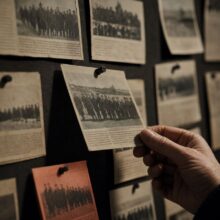
The most systematic survey of the material — a study of more than nine hundred American films featuring Arab characters — found that the overwhelming majority presented them negatively, and that films offering an ordinary, unremarkable Arab character numbered in the low dozens. A century of output arrived at a ratio no real population produces.
The mechanism is not that audiences believe fiction. It is availability: which association surfaces first, before deliberate thought engages. That effect is measurable, it shows up in hiring, tenancy, clinical and screening decisions, and it operates in people who sincerely and accurately report holding no prejudice.
What this section is not
It is not a catalogue of grievances, and it does not argue that unflattering Arab characters should not exist. A fiction in which no member of a group is ever a villain is its own kind of flattening, and audiences see through it.
The complaint that recurs here is about narrowness — a casting sheet with three entries on it — and the measure of progress is variety rather than virtue. Pieces that document improvement sit here alongside those that document the pattern.
| No. | Published | Article | Section | |
|---|---|---|---|---|
| 005 | 2022/01/05 |
Common and Untrue Arab Stereotypes: What Western Media Repeats
Four stereotypes about Arabs do most of the work in Western media. Each is checkable, and each fails the check in a specific and instructive way. |
MED_CRIT | |
| 006 | 2018/03/20 |
Netent’s Arabian Nights – Fairy Tales Under Terrorism Spell
A personal account of finding the Arabian Nights stories rewritten as menace on a slot machine, and reading the original again twenty years later. |
DIG_REPR | |
| 003 | 2017/05/29 |
The Problematic Depictions and Stereotypes of Arabs and Muslims in Western Media
A century of film, a narrow casting pool and a news frame that rarely changes — how Arabs and Muslims in Western media came to be depicted so consistently and so narrowly. |
MED_CRIT | |
| 004 | 2016/10/20 |
Ms. Marvel, Kamala Khan and Muslim Representation in Comics
Kamala Khan was not the first Muslim character in mainstream comics, but she was the first to carry a flagship title — and the first whose ordinariness was the point. |
POP_REPR |


Questions on this section
Q.01
What does this section actually examine?
What happens to Arab and Muslim life on its way into Western film, television, news reporting, publishing and games — who writes it, who is cast, which roles exist to be cast in, and what the accumulated pattern does.
Q.02
Is the argument that Arab villains should not exist?
No. A fiction in which no member of a group is ever a villain is its own kind of flattening. The complaint is about narrowness — a casting sheet with three entries on it — not about any individual unflattering character.
Q.03
Does media repetition really affect anything?
The measurable effect is on availability rather than belief: which association surfaces first, before deliberate thought engages. It shows up in hiring, tenancy, clinical and screening decisions, in people who accurately report holding no prejudice.
Q.04
Has anything improved?
Somewhat. Streaming widened what gets commissioned and by whom, and a handful of series have put ordinary Arab and Muslim families on screen without a security subplot. News framing has moved considerably less than drama has.