
Merry Arabian Christmas: The Most Common Customs and Traditions
Christian communities have kept Christmas in the Arab world for as long as there has been a Christmas. What that looks like differs sharply from the Western template.
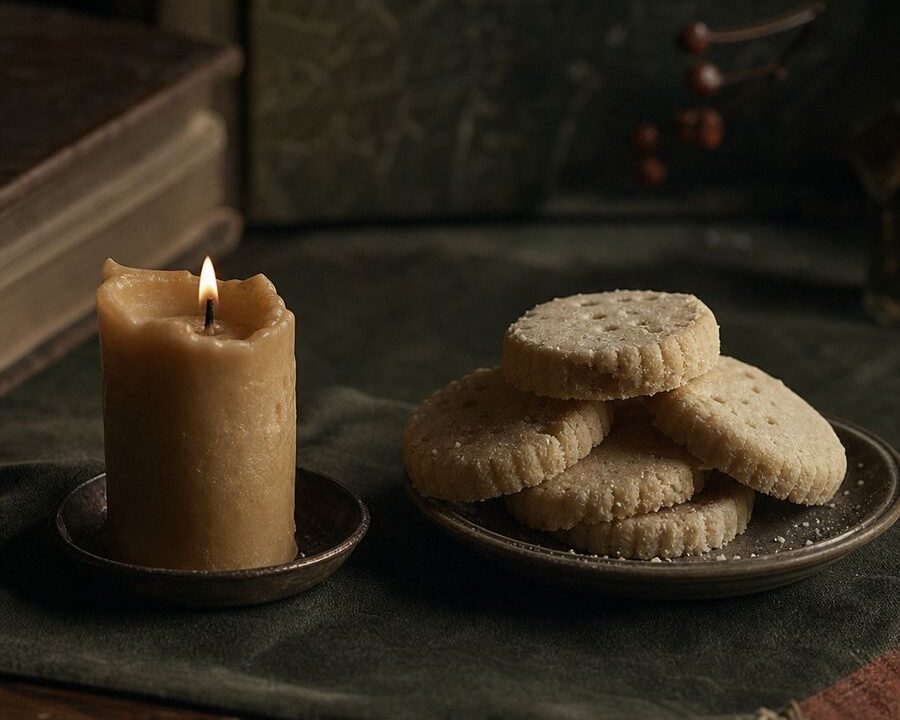
Christmas is celebrated across the Arab world in a variety of ways, shaped by local culture, history and religious tradition. This surprises a lot of Western readers, which is itself a useful indication of how thoroughly the region has been flattened into a single religious identity in the popular imagination.
Christianity is not an import to the Arab world. It began there. Some of the oldest continuously practising Christian communities on earth are Arab, and they have kept Christmas for as long as anyone has.
Who celebrates, and where
Lebanon has the largest proportional Christian population in the region and marks Christmas as a national occasion — decorations across Beirut, public trees, a formal holiday. Syria’s Christian communities, concentrated historically in Damascus, Aleppo and the Valley of the Christians, have observed it continuously despite everything the last decade has done to them.
Egypt’s Coptic Orthodox Church is the largest Christian body in the Middle East, numbering in the millions. Jordan, Iraq and Palestine all have long-established communities, and Bethlehem — in the West Bank — receives pilgrims each December to the church built over the traditional site of the nativity.
In the Gulf states, where Christian populations are overwhelmingly expatriate, observance is largely private or takes place in designated compounds. Several countries have permitted purpose-built churches for those communities.
The date is not one date
The most common Western misconception is that Christmas happens on 25 December. Across the Arab world it depends which calendar a church keeps.
Communities on the Gregorian calendar — most Catholics, Maronites, Melkites and Protestants — mark 25 December. The Coptic Orthodox Church celebrates on 7 January, following the Julian reckoning, and precedes it with a forty-three-day fast that excludes all animal products. Armenian churches keep 6 January, combining the nativity with Epiphany.
In a mixed city this means the season runs for a fortnight or more, with different neighbourhoods reaching their peak at different points.
Customs that differ from the Western template
The commercial machinery that dominates a Western December is largely absent, and what remains is closer to what the occasion looked like before that machinery existed.
The centre of gravity is the church service and the meal that follows it, not the morning’s gift exchange. Midnight mass is well attended, including by people who are not otherwise observant. Gifts exist but are modest and given to children rather than exchanged across the adult household.
Several customs have no Western counterpart. In parts of Syria and Lebanon, a bonfire of dried vine branches is lit in the churchyard on Christmas Eve while a passage from the gospels is read. Coptic households traditionally break the long fast after the midnight liturgy with fattah, a dish of bread, rice and meat. In Iraqi Christian tradition, a family member reads the nativity account by candlelight while the rest of the household holds lit candles, and the ashes of the fire that follows are used to mark a cross.
Food, and the sweets that cross the religious line
The Christmas table is regional rather than standard. Levantine households serve stuffed lamb, kibbeh in its baked and fried forms, vine leaves, and rice cooked with minced meat and toasted nuts. Egyptian Coptic tables run to fattah and slow-cooked meat after six weeks of fasting.
Sweets do the most social work. Maamoul — shortbread stuffed with dates, pistachios or walnuts and pressed in a carved wooden mould — is made in large batches and distributed to neighbours. It is also made for Eid, by the same families, in the same moulds. In practice the sweet belongs to the region rather than to either religion, which is a fair description of much of the surrounding culture.
Christmas as an ordinary rather than exceptional thing
The interesting fact about Christmas in the Arab world is not that it is exotic. It is that it is unremarkable.
Muslim neighbours visit, bring sweets and sit down to the meal, much as Christian neighbours do at Eid. Municipal decorations go up in cities where the Christian population is a minority. For a great deal of the region’s history this was simply how mixed cities worked, and in many places it still is.
That is worth stating plainly, because it sits directly against the single-identity picture examined in the record on common stereotypes about Arabs — a picture in which the Arab world contains exactly one religion and no Christmas at all.
Questions on this article
Q.01
Do Arab countries celebrate Christmas?
Several do, publicly and officially. Lebanon, Syria, Jordan, Egypt, Iraq and Palestine all have long-established Christian communities, and Christmas is a public holiday in a number of them. The Gulf states permit private observance for their large expatriate populations.
Q.02
When is Christmas in the Arab world?
It depends on the church. Communities following the Gregorian calendar mark 25 December. The Coptic Orthodox Church in Egypt, and Orthodox communities elsewhere, celebrate on 7 January. Armenian churches keep 6 January.
Q.03
Do Muslims in the Arab world take part in Christmas?
Frequently, in the way neighbours take part in each other’s occasions — visiting, exchanging sweets, attending a friend’s family meal. In mixed cities such as Beirut and Amman the decorations are municipal and the season is broadly civic.
Q.04
What is eaten at an Arab Christmas?
Regionally specific and rarely a turkey. Levantine tables run to stuffed lamb, kibbeh, rice with nuts, and a long procession of sweets — maamoul above all, the date- or nut-filled shortbread made in quantity for both Christmas and Eid.